Offshore Wind Jobs at Sea: The Fastest-Growing Maritime Employment Sector
Ten years ago offshore wind was a niche sector with a small fleet of small vessels. In 2026 it is a major maritime employer with installation vessels, service operation vessels and crew transfer vessels operating in the North Sea, Baltic, East Coast of the United States and increasingly in Asian waters. The employment opportunities are growing faster than the maritime workforce can supply them and the pay is competitive with conventional offshore oil and gas work.
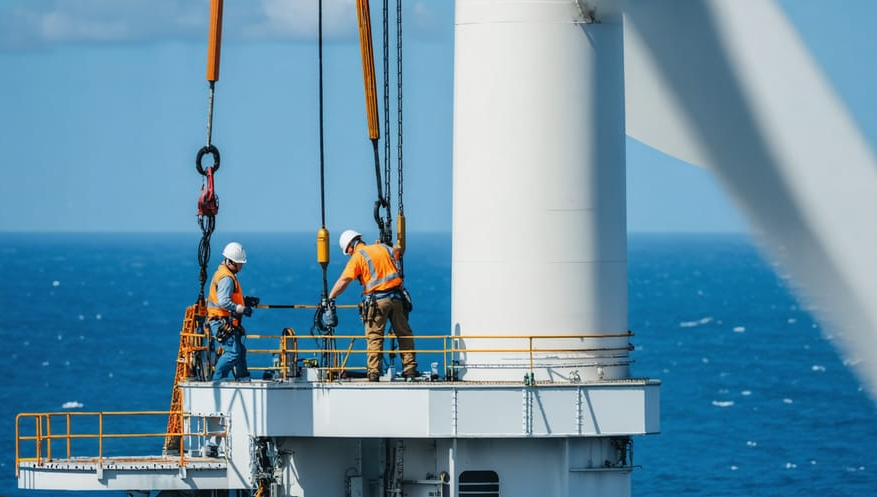
The vessels are different from both merchant shipping and oil and gas offshore. Crew transfer vessels are fast, purpose-built catamarans that carry maintenance technicians from port bases to offshore wind turbines and return them at the end of the working day. The skippers are small vessel operators working in sea states that would ground many coastal vessels. Service operation vessels are larger, keeping technicians offshore for extended periods with workshop facilities, accommodation and crane capability for heavy maintenance. Cable layers and installation vessels are the heavy end of the fleet, large sophisticated ships that physically install the infrastructure.
GWO Basic Safety Training is the specific certificate required for anyone working in an offshore wind environment. It covers working at height, sea survival, fire awareness, manual handling and first aid specific to the wind sector. The five-module package takes approximately two days and costs around £500 to £800 in the UK. This is separate from BOSIET. Some roles require both. The GWO certificate is not optional regardless of maritime qualifications held.
Pay: crew transfer vessel skipper earns $4,500 to $7,000 per month on rotation. Service operation vessel master: $9,000 to $14,000. Chief Officer: $7,000 to $11,000. Chief Engineer: $8,000 to $13,000. These positions operate on 14/14 or 21/21 rotations in most European operations, which means predictable home time and shorter separations than deep-sea cargo shipping.
For maritime officers with existing STCW certificates and BOSIET, adding the GWO package is the practical entry step. The offshore wind sector is actively recruiting from the conventional offshore and merchant shipping pool. Officers who position themselves with the relevant certificates now are entering a market that will be larger in five years than it is today and where the early entrants build the experience records that the more demanding installation vessel positions will require.